Don’t be conformed to this world, but be transformed by the renewing of your mind, so that you may prove what is the good, well-pleasing, and perfect will of God.
1080 × 1350 · Keep the reference and WEB label when sharing. Usage & credits
Read and share Romans 8:28 in context
AI-assisted reading and design notes, updated 21 October 2026. These are separate from Scripture and are not specialist theological advice.
Where the words belong
Romans 8:18–27 speaks about suffering, creation groaning, hope and weakness in prayer. Verse 28 follows those themes. The next verse connects God's purpose with being conformed to the image of his Son. Read through verse 30 to keep the meaning of 'good' connected to Paul's argument rather than assuming it means immediate comfort or material success.
A careful reading
The passage does not call every event good or ask a person to pretend that harm does not hurt. It expresses confidence in God's purpose amid the suffering already described. When sharing it with someone in distress, allow space for grief and avoid suggesting that you can explain why a particular tragedy happened.
When making an image
For a sympathy message, pair the image with a simple personal sentence such as 'I am thinking of you and can listen.' Keep that sentence separate from Scripture. Use a calm background and check that the reference remains readable at phone size.
1080 × 1350 · Keep the reference and WEB label when sharing. Usage & credits
Read and share Philippians 4:6–7 in context
AI-assisted reading and design notes, updated 21 October 2026. These are separate from Scripture and are not specialist theological advice.
Where the words belong
Philippians 4:4–9 includes rejoicing, gentleness, prayer, thanksgiving and attention to what is worthy of thought. Verses 6–7 connect bringing requests to God with a description of peace. Read the pair together so a command about anxiety is not separated from the prayer and reassurance surrounding it.
A careful reading
When using this passage for encouragement, avoid turning it into blame. A person can pray and still experience distress. The passage is a religious text for reflection; it is not a diagnosis or a substitute for appropriate professional care. A supportive message can invite prayer while respecting what the recipient is experiencing.
When making an image
These two verses are longer than many phone graphics can comfortably display. Use a tall format or share a link to the passage as well as the image. Check the final line and translation label before sending.
1080 × 1350 · Keep the reference and WEB label when sharing. Usage & credits
· Utah
The Light of the World
John 8:12 · World English Bible (WEB)
Again, therefore, Jesus spoke to them, saying, “I am the light of the world. He who follows me will not walk in the darkness, but will have the light of life.”
1080 × 1350 · Keep the reference and WEB label when sharing. Usage & credits
· Utah
Renewed Strength
Isaiah 40:31 · World English Bible (WEB)
But those who wait for Yahweh will renew their strength. They will mount up with wings like eagles. They will run, and not be weary. They will walk, and not faint.
1080 × 1350 · Keep the reference and WEB label when sharing. Usage & credits
Read and share Isaiah 40:31 in context
AI-assisted reading and design notes, updated 21 October 2026. These are separate from Scripture and are not specialist theological advice.
Where the words belong
Isaiah 40:27 voices a complaint about being overlooked. The following verses contrast human weariness with God's enduring strength, before verse 31 speaks about those who wait for him. The images of flying, running and walking conclude that movement from exhaustion to renewed strength.
A careful reading
Waiting is part of the picture, rather than an obstacle to be removed from it. The verse can support a reflection on endurance, but it does not provide a timetable for a person's recovery. Nor should it be used to tell someone that physical exhaustion proves a lack of faith.
When making an image
An eagle background is optional: legibility matters more than matching every image in the verse. If the whole verse becomes small, choose the story format and inspect the downloaded PNG. Do not remove the reference or merge a personal caption into the quotation.
1080 × 1350 · Keep the reference and WEB label when sharing. Usage & credits
Read and share 1 Corinthians 13:4–7 in context
AI-assisted reading and design notes, updated 21 October 2026. These are separate from Scripture and are not specialist theological advice.
Where the words belong
First Corinthians 13 sits between chapters discussing spiritual gifts and their use in the community. Its opening verses contrast impressive speech, knowledge and generosity with the absence of love. The familiar descriptions in verses 4–7 continue that argument. Although often read at weddings, the chapter is not limited to marriage.
A careful reading
The passage describes love through actions and restraints: patience, kindness and refusing to rejoice in wrongdoing, among others. Read those statements together. In particular, the language about bearing and enduring should not be detached from the rejection of unrighteousness and used to pressure someone to accept harm.
When making an image
The complete four-verse passage needs more space than a short card. Choose a tall layout, or use one complete verse with its own accurate reference. A wedding caption is your application of the text; it should not be presented as the original setting of the letter.
Don't you be afraid, for I am with you. Don't be dismayed, for I am your God. I will strengthen you. Yes, I will help you. Yes, I will uphold you with the right hand of my righteousness.
1080 × 1350 · Keep the reference and WEB label when sharing. Usage & credits
Read and share Isaiah 41:10 in context
AI-assisted reading and design notes, updated 21 October 2026. These are separate from Scripture and are not specialist theological advice.
Where the words belong
Isaiah 41:8–9 names Israel, Jacob and Abraham before the reassurance in verse 10. Those names identify the original address. The chapter speaks of God's help and faithfulness to his servant. Read verses 8–13 as a unit so the reassuring words are not detached from their place in the text.
A careful reading
The passage repeats the language of presence, strengthening and help. When reflecting on it today, distinguish that original address from your personal application. Saying 'this passage helps me reflect on trust' is different from promising a reader that a specific feared outcome cannot occur.
When making an image
The verse contains several clauses. Story or portrait format gives those clauses more room than a compact square. Before sending the image, check every line and the reference. If you add a note to a worried friend, acknowledge their fear rather than telling them that feeling afraid is wrong.
1080 × 1350 · Keep the reference and WEB label when sharing. Usage & credits
Read and share Matthew 11:28 in context
AI-assisted reading and design notes, updated 21 October 2026. These are separate from Scripture and are not specialist theological advice.
Where the words belong
Matthew 11:28 is followed by an invitation to take Jesus' yoke and learn from him. The following description of gentleness and humility belongs with the promise of rest. Reading verses 28–30 together makes it clear that the invitation includes relationship and learning, not only a moment of relief.
A careful reading
The contrast between heavy burdens and a yoke invites careful reading. A reflection might ask what it means to learn from a gentle teacher while carrying real responsibilities. Avoid using the verse to suggest that a tired person is failing spiritually or should stop seeking practical support. The image can offer encouragement without diagnosing its recipient.
When making an image
For a friend who is exhausted, keep your own message concrete and kind. Ask whether a meal, a call or help with a task would be useful. The verse can accompany that offer; it does not need to replace it.
1080 × 1350 · Keep the reference and WEB label when sharing. Usage & credits
Read and share Psalm 46:1 in context
AI-assisted reading and design notes, updated 21 October 2026. These are separate from Scripture and are not specialist theological advice.
Where the words belong
Psalm 46 opens by describing God as refuge, strength and help in trouble. The next verses picture the earth changing and mountains moving into the sea. Later the psalm turns to nations and wars. Its opening reassurance is therefore set beside disruption, not a claim that disruption never comes.
A careful reading
Notice the relationship between 'help' and 'trouble': the verse places them together. A reflection can ask where support is needed in a difficult day without pretending that the difficulty is unreal. Reading the complete psalm also keeps the familiar line 'be still' connected to its broader language about God and the nations.
When making an image
Use a simple background so the short opening statement stays prominent. If the image is intended for a community facing a crisis, add practical information or an offer of support separately from the quoted verse.
1080 × 1350 · Keep the reference and WEB label when sharing. Usage & credits
Read and share Philippians 4:13 in context
AI-assisted reading and design notes, updated 21 October 2026. These are separate from Scripture and are not specialist theological advice.
Where the words belong
In Philippians 4:10–20, Paul thanks the Philippians for their support. Immediately before verse 13, he describes knowing both need and abundance, including hunger and being well fed. He says that he has learned contentment in those different conditions. The statement about strength grows out of that discussion, rather than appearing as a general promise of unlimited achievement.
A careful reading
Read 'all things' with the preceding sentences in view. Here the emphasis is strength amid changing circumstances. Using the verse as a guarantee of winning a contest, obtaining a promotion or reaching every personal goal adds a claim that this passage does not make. A useful reflection question is: what would contentment look like in the situation I am actually facing?
When making an image
The verse fits a square image, but a short accompanying caption can prevent a misleading impression: 'Read with Paul's words about need and plenty in Philippians 4:11–12.' Keep your caption outside the quotation so it is clearly your explanation.
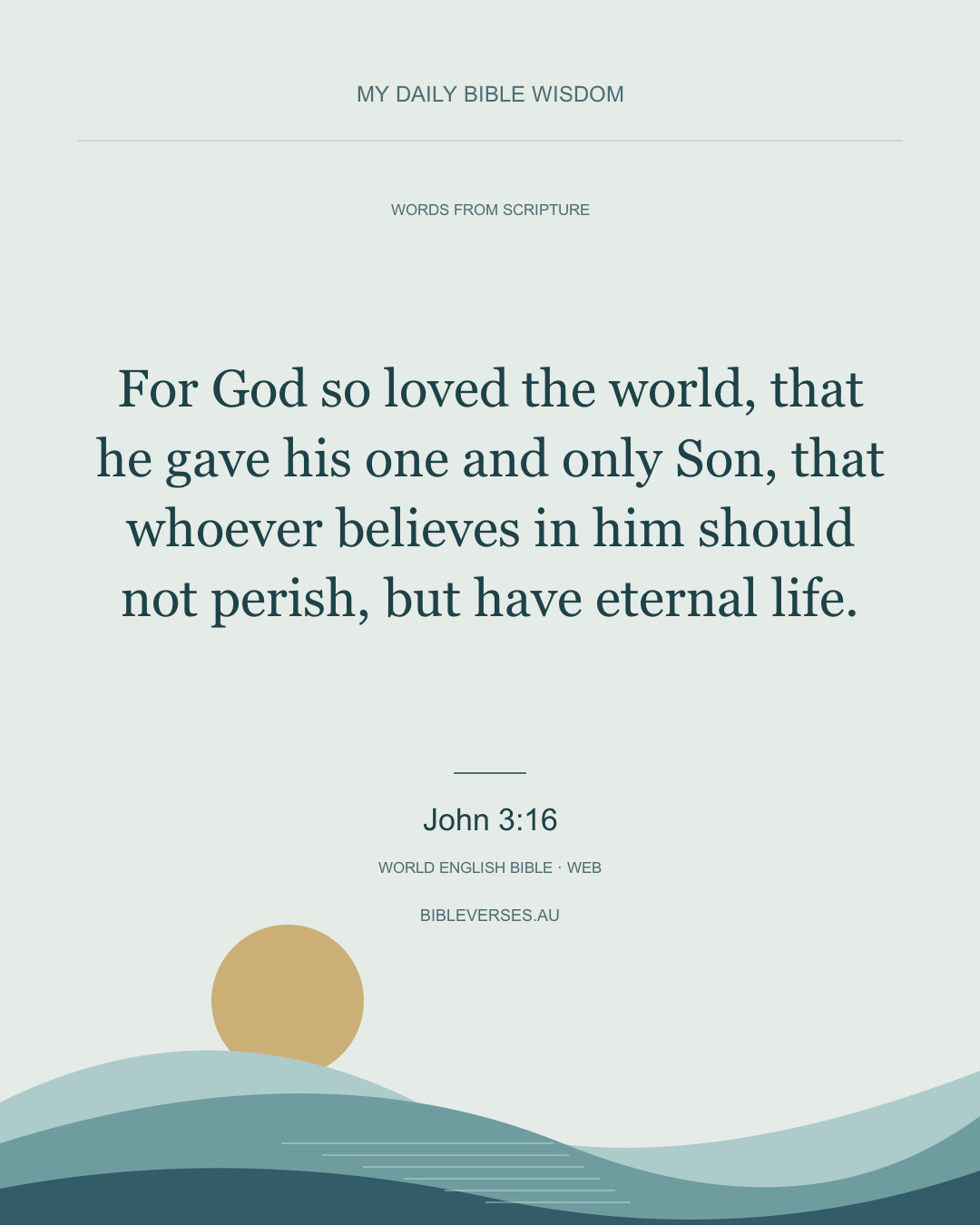
1080 × 1350 · Keep the reference and WEB label when sharing. Usage & credits
Read and share John 3:16 in context
AI-assisted reading and design notes, updated 21 October 2026. These are separate from Scripture and are not specialist theological advice.
Where the words belong
John 3 begins with Nicodemus visiting Jesus and asking about his identity. The conversation introduces new birth, then the image of the serpent lifted up in the wilderness (3:14–15). Verse 16 belongs to that discussion of belief and life. Verse 17 continues the thought by describing the Son's mission in terms of saving the world. Read 3:14–21 together before treating verse 16 as a self-contained slogan.
A careful reading
The verse moves from God's love to the giving of the Son, then to belief and eternal life. A caption can help a reader notice that movement. It should not turn the verse into a promise that faith removes every difficulty. The passage also speaks about light, truth and the response to Jesus; those surrounding themes matter when explaining its meaning.
When making an image
This is a relatively long sentence for a small image. Use portrait or story format, keep the whole sentence, and leave the reference and WEB label visible. If the result needs tiny type, choose a shorter complete passage rather than silently cutting the middle of this one.
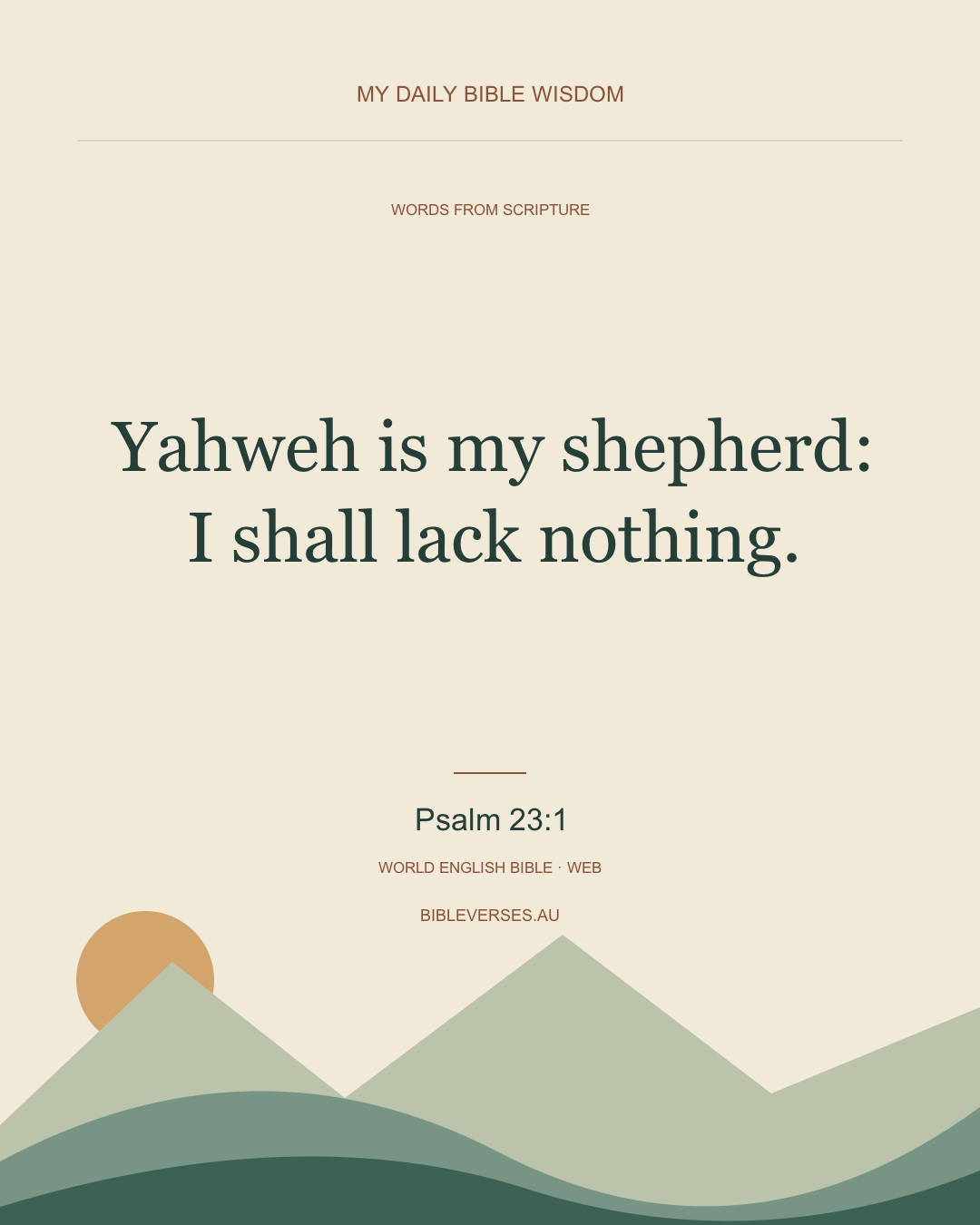
1080 × 1350 · Keep the reference and WEB label when sharing. Usage & credits
Read and share Psalm 23:1 in context
AI-assisted reading and design notes, updated 21 October 2026. These are separate from Scripture and are not specialist theological advice.
Where the words belong
Psalm 23 develops its opening shepherd image through rest, guidance, danger and hospitality. Verse 4 includes a dark valley, so the whole poem is not a description of a life without threat. Near the end, the imagery changes to a table, anointing and a dwelling place. Reading all six verses gives the short opening line its fuller movement.
A careful reading
The WEB phrase 'I shall lack nothing' and the KJV phrase 'I shall not want' need to be compared as complete statements. In the older wording, 'want' concerns lack, rather than a claim that the speaker has no wishes. A thoughtful caption can connect the shepherd image to trust and care without promising that every desired possession will appear.
When making an image
This short verse is a useful first export test in the maker. Try the square size, then open the saved image at its normal display size. Keep 'Psalm 23:1' and the selected translation attached when posting or printing it.
Before sharing, read the chapter rather than treating the image as a complete argument. A line from a prayer, a proverb and a letter can each work differently in its original setting.
Look for the speaker and audience. Is someone praying, telling a story, giving counsel or describing a hope?
Read the paragraph around the verse. Notice whether a promise, instruction or image has conditions or a particular setting.
Write your own observation separately from the quotation. Keep personal encouragement distinct from the biblical wording.
The publication time marks when a design enters this journal. The complete set is also available in the portrait collection. Our main verse of the day follows the Sydney calendar and is selected independently.